October 28, 2026

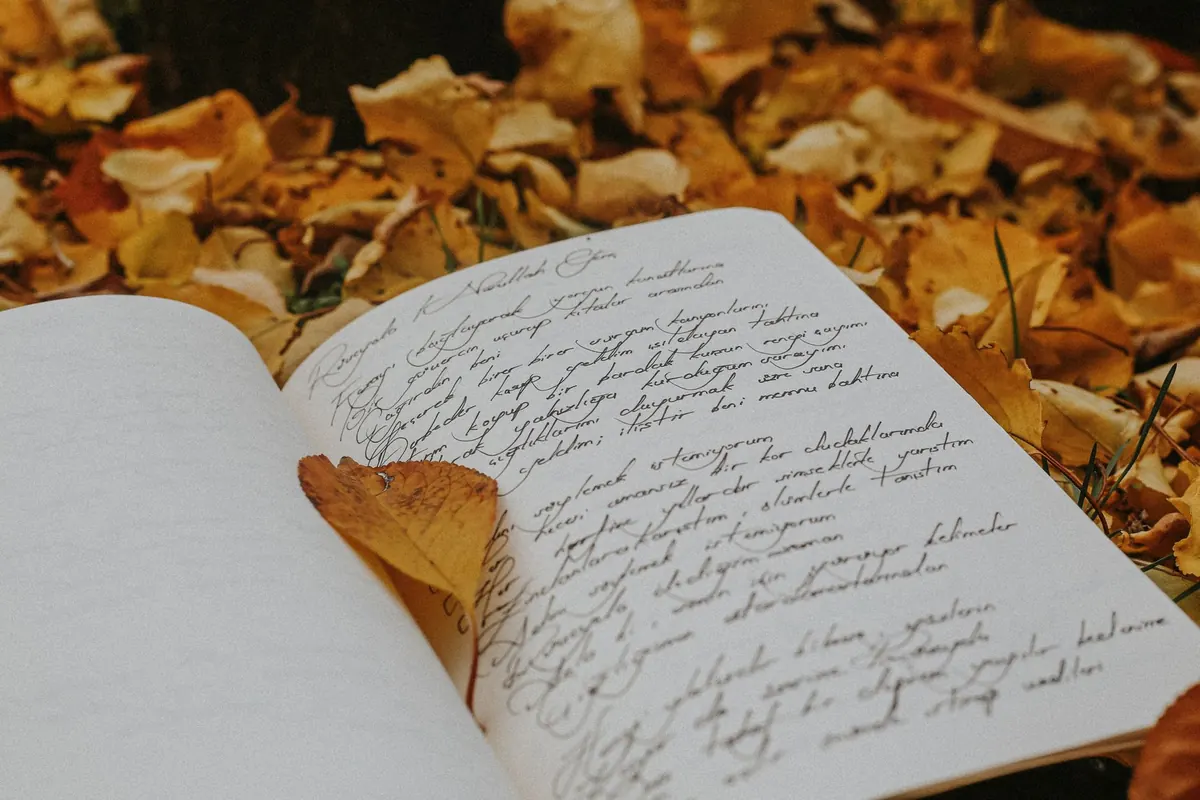
Choose a morning when nothing is urgent. Fill a flask, slide a notebook into your coat pocket, and step out of your front door with an oddly specific assignment: notice your own street through five senses, then write it down. Not the street as it appears in photographs, but the street as it arrives — the smell at the bakery corner, the gate down the block that never quite latches, the particular cold of a handrail in November. You already know these things. You have simply stopped keeping them.
This is a small practice with a large return. An hour of walking and fifteen minutes of writing will fill a page that reads like your neighborhood and nobody else's. Here is how to do it well.
Set the Frame Before You Leave
The walk should be short enough that you can hold it in your head. A loop of fifteen to twenty-five minutes is plenty — four or five blocks out, the same distance back by a slightly different route. Longer than that and the details blur into a blur of movement.
Leave the earbuds at home. Put the phone in a pocket with the sound off; if you want photographs, take three at most and take them at the end. Carry a notebook small enough that you forget it is there, and a pen that does not smudge when your hands are cold. A pencil is honestly better in winter.
One rule holds the whole exercise together: walk slower than feels natural. Half your usual pace. You are not going anywhere.
Sight: Write Down the Unphotogenic Things
Resist the view. Anyone can describe a nice sunset. The good material is the stuff nobody puts on a postcard: the doorbell plate with three names crossed out and two written in, the mismatched tiles where the step was repaired, a hedge clipped at a stubborn slant, a single chair on a balcony facing nothing in particular.
Look up, then down. Above the shop signs there is usually a whole second layer — old lettering, a satellite dish mounted crooked, a window box that has been empty since spring. At pavement level you get the other half: chalk marks, weeds in a gutter joint, a dropped glove that will still be there on Thursday.
Write nouns first and adjectives later. "Bench. Wet." is a better note than "a rather melancholy wet bench." The adjective will come back to you when you write the entry, and it will be more accurate for having waited.
Sound: Stand Still for Two Minutes
Pick three spots and stop in each of them for a full two minutes. A corner, a bench, a doorway out of the wind. Standing still does something to your ears that walking does not.
Try listening in layers. Nearest first — your own breathing, a bag rustling, the tick of a bicycle freewheel. Then the middle distance: a radio in a kitchen window, a kettle, a child counting, a gate latch, a dog that answers every third noise. Then the far layer: traffic on the main road, a train you can hear but not see, a plane, a siren that fades before you can decide how you feel about it.
Note what is missing as carefully as what is there. A Sunday street with no deliveries has a sound of its own. So does the moment the school run ends. Use a single line for this:
The absence of sound is also a detail worth recording — write "quiet, but a busy quiet" or "no cars, only pigeons" before it slips away.
Smell and Taste: The Slowest Senses
Smell is unreliable and that is exactly why it belongs in the notebook. It arrives in bursts, often with a memory attached, and it is gone before you can name it. Do not force it. Just keep a short list as you go: bread, laundry detergent from a vent, rain hitting warm pavement, diesel, jasmine on a fence, the sharp green smell of a hedge being cut somewhere out of sight. If a smell is bad, write that too. A drain after rain is as much your street as the bakery is.
Taste is the sense people skip, so give it one deliberate moment. Bring something small with you — a piece of fruit, a mint, a flask of tea — and eat it halfway round, sitting down. Or stop at the place you always walk past and buy one thing. Pay attention to the first bite rather than the second, and to the way cold air changes what you taste.
Sometimes the honest note is "nothing." Write it anyway. A page that admits a sense gave you nothing is more useful than a page that invents a smell to fill the gap.
Touch: What Your Hands Already Know
Your fingertips are quicker than your eye. On the way back, let your hand rest for a second on the things that are safe to touch: a cold iron railing, rough stucco, a bench polished smooth in the middle, the bumpy repaint on a bollard, a smooth stone set into a wall. Take your gloves off for the last five minutes if the weather allows. Cold is information.
Touch also means the rest of your body — cobblestones through thin soles, a slope you have never consciously noticed, wind on the back of your neck at a particular corner, the weight of a door that needs a shoulder.
Keep it public and sensible. Skip anything sharp, wet, dirty, or clearly someone's private property, and let a dog sniff your hand before you pat it. When it comes to the physical details of your own body during these walks, common sense goes a long way; anything that worries you on that front is a question for a doctor, not a notebook.
Turn the Notes Into One Entry
Write within an hour of getting home, while the walk is still warm. Fifteen minutes is enough. The entry does not need to be beautiful, and it should not try to be; it needs to be specific.
- Head the page: date, rough time, weather, and the route in a few words.
- Give each sense its own short block — four or five lines is plenty. Pull from your notes rather than from memory.
- Write the best lines in the present tense. "The bakery door is propped open with a brick" puts you back on the pavement.
- Finish with one sentence: the thing you would have missed if you had walked at your normal speed.
Then keep a second page at the back of the notebook — a running list of details that recur. The gate, the radio, the slant of that hedge. Over a few weeks this list becomes something quietly valuable: a record of the small constants of where you live, and of the day one of them changed.
Make It a Standing Appointment
Once is a nice afternoon. Repeat it and it becomes a diary. Put the walk in your week — the same route, the same hour, one page each time — and let the seasons do the work for you. The jasmine will stop. The bench will get a notice taped to it. The bakery will change hands, or change its opening hours, and you will have written down how it was before.
Keep the kit minimal and the ambition small. One loop, five senses, one page. If you come home with two good sentences and a smell you cannot name, the walk has done its job.
Photo: StartupStockPhotos / Pixabay