October 19, 2026
The photo you will actually want in ten years is probably not the one where everyone is looking at the camera. It is the one with the cereal bowls stacked in the sink, the rain boots tipped over by the door, the cat asleep on a pile of laundry you meant to fold. Big occasions get their own albums, their own shared folders, their own proud aunties. Ordinary days are the ones that slip away.
A memory keeping album built from everyday photos does not need expensive supplies or hours of scrapbooking. It needs a printer, a plain album, and a habit small enough to survive a bad week. Here is how to start one this month and still be adding to it next year.
Start with the photos already on your phone
Do not begin by organizing your camera roll. That project can eat a weekend and produce nothing you can hold. Instead, pick one month — last March, say — and scroll until you find roughly forty pictures that made you pause. The favorites button on your phone is fine for this. The only rule is speed: if you hesitate longer than three seconds, keep it. You are not curating a portfolio, you are collecting evidence of a life.
Print that batch before you buy anything else. Physical photos force decisions in a way a screen never does. If you print at home, use matte paper and let the sheets dry flat for an hour before you touch them. If you order prints, standard 4x6 is cheap and fits almost every album format. Order more than you think you need — a second copy of the good ones costs very little and saves you a reorder three weeks later.
Choose a format you can actually finish
The album that gets filled is the small, unremarkable one sitting on a shelf you can reach. Anything that requires a dedicated desk and twenty minutes of setup will stay empty. Consider these:
- A 6x8 or A5 ring binder with page protectors. Cheap to refill, easy to rearrange, forgiving when one afternoon deserves four pages.
- A slip-in pocket album sized for 4x6 prints. The fastest option by far — no adhesive, no trimming, no decisions beyond order.
- A notebook and a glue stick. Underrated. Write straight on the page, stick the photo down, done.
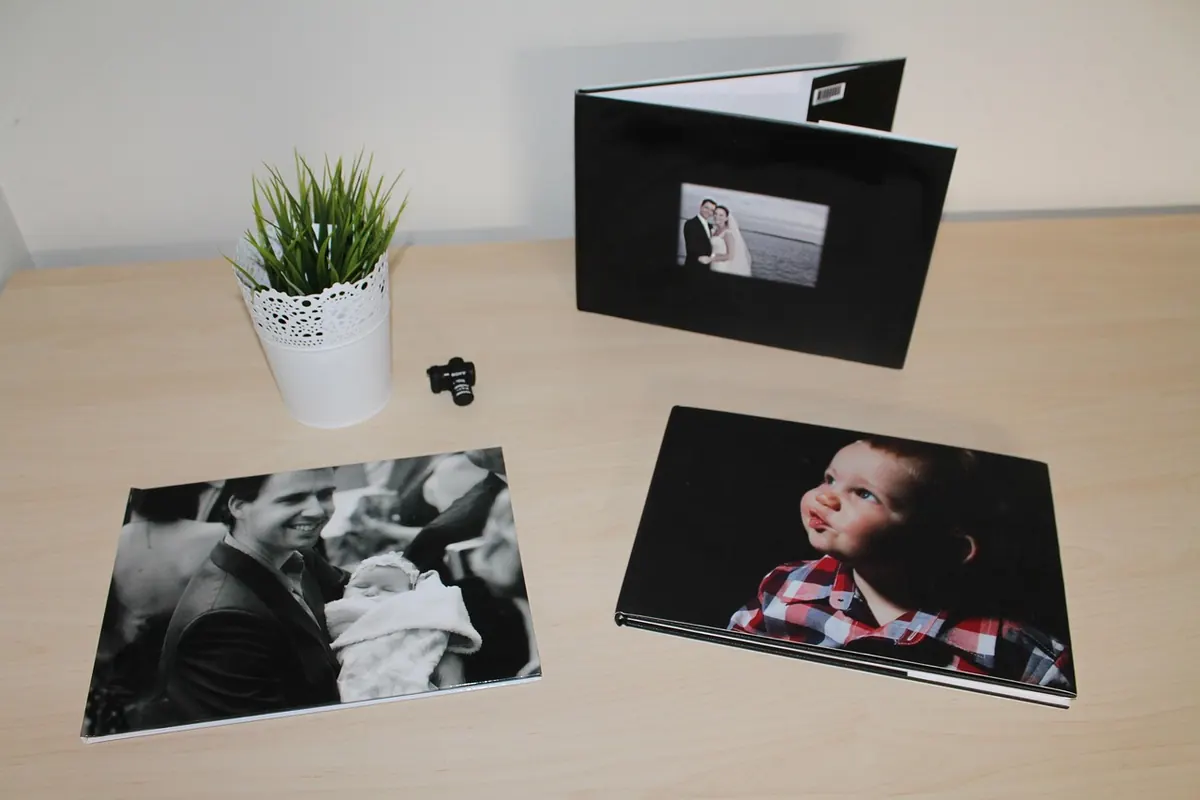
- A yearly photo book. Good if you would rather design on a screen once a year than handle paper every month.
Pick one and buy the smallest version of it. Size matters more than style here: a book that holds sixty pages will feel finishable, while a heavy leather album with room for three hundred invites you to save it for a better year that never arrives. Upgrade in year two, once you know what you actually use.
Print on a rhythm, not on a whim
Most albums die in the gap between the photo and the paper. Close that gap with a single recurring appointment: the first Sunday of the month, twenty minutes, order prints from the last four weeks. Keep a to-print album on your phone so you can drop pictures in as they happen instead of scrolling back through thousands of screenshots.
Twenty or thirty prints a month is plenty — roughly one a day, which is more than enough to remember a season. If you fall behind, do not restart the system. Order the backlog in one go and keep the date on the calendar.
Write what the photo cannot say
A caption that reads "Summer 2024" will tell you nothing in fifteen years. The details that matter are the ones you assume you could never forget: what the argument was about, who refused to eat the green things, what song was playing in the car, what the joke was. Write those down the same week, while they still feel too ordinary to bother with.
Two lines is enough
Try this shape: what was happening, plus one specific thing.
Saturday morning, pancakes burned again. She ate them anyway and told me they were "crispy," which is now the family word for burnt.
Often the smallest facts carry the most weight — the price of the ice cream, the name of the teddy bear, the fact that it rained all week. If you are stuck, answer three questions on the back of the print: who, where, and what happened just before and just after.
Let the ordinary into the frame
You will not remember to photograph the routine until you decide in advance what counts as worth shooting. Keep a loose list of everyday subjects and glance at it when the light is decent:
- The kitchen counter at the end of a meal, before anyone clears it.
- Shoes, bags and coats piled by the door.
- Hands — doing homework, chopping onions, holding a cup.
- The walk to school or the bus stop, shot from behind.
- Bedtime: the same blanket, the same book, the same tired face.
- The fridge door with its notes and magnets.
- Whatever ends up on the sofa on a Sunday afternoon.
Shoot wide enough to show the room, not just the person. In ten years the wallpaper, the clutter and the view out of the window will be as interesting as the faces.
Build pages without agonizing
Decide your layout rules once, then stop thinking about them. A workable set: chronological order, one to four photos per page, a caption under each, and a few blank pockets left at the end of every month for prints that arrive late. Repeat the same arrangement until it feels automatic. Consistency looks intentional, even when it is only efficiency.
Resist the urge to correct. Crooked photos, mismatched paper, handwriting that drifts downhill across the page: none of it matters. A finished album with a crooked page is worth far more than a perfect one you are still planning. Keep it somewhere visible, too. Albums on a shelf get added to; albums in a storage box get forgotten.
Your first session, in one evening
- Choose one month from the last year. Not the whole year.
- Mark thirty to forty photos, fast, without second-guessing.
- Order or print them at 4x6.
- Buy a simple album with page protectors.
- Set a thirty-minute timer, slip the prints in, and caption only the ones you remember clearly.
- Write the month on the first page, then put the album on a shelf at eye level.
Keep it going when the novelty fades
Most albums stop in month three, when the stack of prints sits on the counter and the evening disappears. Plan for that in advance. Set the monthly reminder before you start, keep spare page protectors in the same drawer as the album, and accept that some months will be thin. Three photos and one line of text is a complete entry.
Twice a year, take a catch-up evening. Order the backlog, caption what you can still remember, and let the rest go uncaptioned. Nothing in a memory keeping album has to be complete to be worth keeping.
The point is not the archive. It is that on an ordinary Tuesday in twenty years, you can open a page and find the burnt pancakes, the rain boots, the cat on the laundry — and remember that this was the life.
Photo: Toomanyloginnames / Pixabay