October 10, 2026

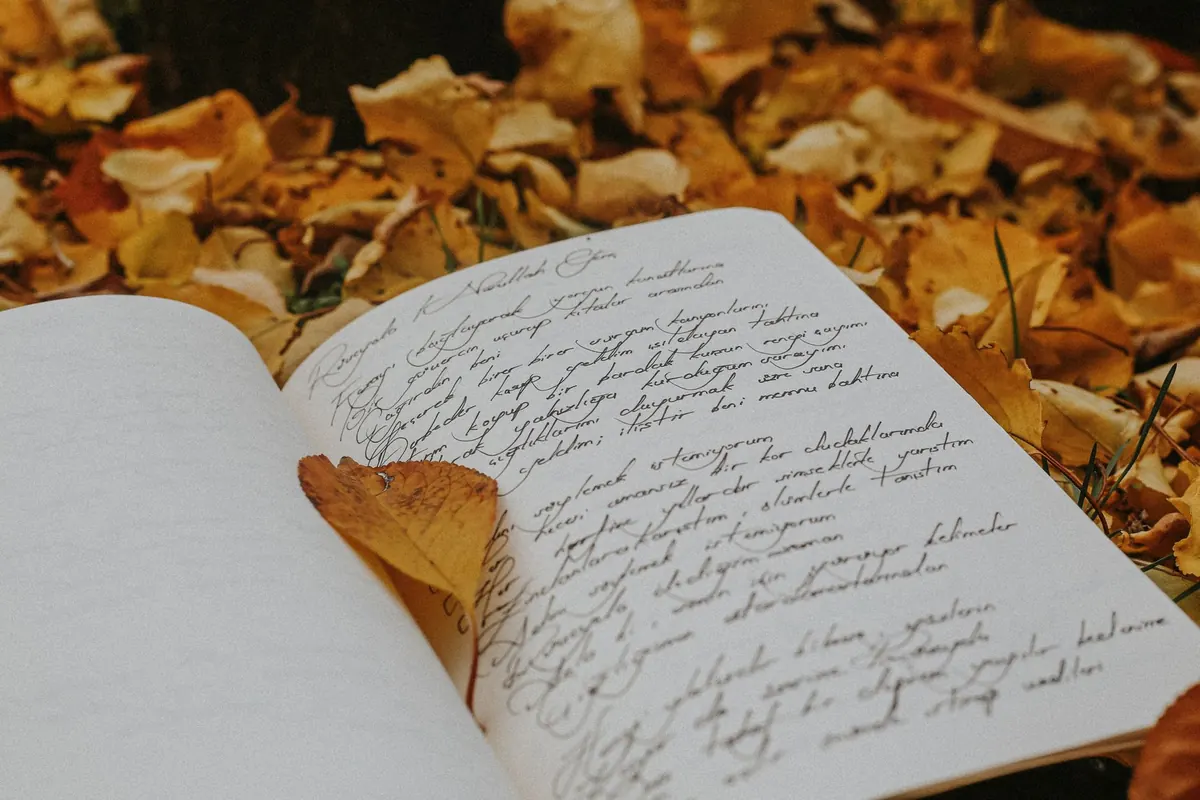
There's a particular silence that shows up when you open a gratitude log on a flat day. The pen is there. The page is there. Nothing comes.
It's usually not because nothing good happened. It's because the log has quietly turned into a test, and a test you suspect you're failing. When you're tired, your mind reaches for big, camera-ready items: health, family, the job, the roof. Then it decides none of those count today, and the page stays blank for the fourth morning in a row.
The fix isn't more discipline. It's a smaller target and a few reliable ways in.
Make the Entry Smaller Than Feels Reasonable
Aiming for meaning is the most common mistake on low-motivation days. Meaning is heavy. It requires energy you don't have at seven in the morning, and it invites you to grade your own life against an imaginary standard.
Aim for accuracy instead. Compare these two entries:
Grateful for my family and my health.
Grateful that the bus was late and I got to finish my coffee sitting down.
The first is a greeting card. The second is a memory, and it took four seconds to write. It also does the thing a gratitude log is actually for: it teaches you to notice the texture of a day rather than its headline.
One line is a complete entry. Two words can be a complete entry. The radiator. Genuinely. counts, and on some January mornings it is the most honest thing on the page.
Start With Your Body, Not Your Feelings
Feelings are hard to summon on demand. Sensations aren't. If you're stuck, scan the last few hours for physical comfort and write that down before you attempt anything more elevated: the first cold sip of water after a walk, a shirt that didn't itch, the specific quiet of a house before anyone else is awake, a chair that held you up during a long call.
This works because it sidesteps the question "is my life good?" and replaces it with "what was pleasant in the last six hours?" The second question has answers. The first one rarely does at eight in the morning.
Twenty Prompts for Stuck Days
Keep a few of these in the back of the notebook and pick one when the page is winning.
- Something you used today without thinking about it — a kettle, a key, a chair.
- A moment in the last day when you were neither too hot nor too cold.
- A person who made a small thing easier.
- Something you didn't have to do today.
- A sound you'd miss if it stopped.
- Food that tasted better than it needed to.
- A mistake that didn't cost you anything.
- Something that worked on the first try.
- A place you sat down in.
- Something old you still use.
- Someone who replied quickly.
- A thing you complained about that turned out fine.
- Ten minutes that were entirely yours.
- A smell that arrived before you expected it.
- Something you own that fits properly.
- A rule you followed that saved you time.
- A small kindness you received and didn't acknowledge at the time.
- A song you didn't skip.
- A task you finished badly but finished.
- Tomorrow's first easy thing.
Borrow a Sentence Stem
When you can't find your own words, use someone else's shape and fill in the middle. A half-finished sentence is much easier to approach than a blank line.
- Today I was relieved that…
- I noticed…
- I didn't expect…
- The best two minutes of the day were…
- I'm not grateful for ____, but I am grateful for ____.
- Someone made ____ easier by ____.
Here's what that looks like filled in: The best two minutes of the day were standing in the stairwell because the lift was broken and realising I could take my time. Not profound. Not meant to be. It's a record, not a speech.
Write Down What Didn't Happen
Gratitude logs lean heavily on events, which leaves out half of a day. Plenty of good things are absences: the email that never came, the headache that lifted at noon, the awkward conversation that simply didn't happen, the rain that held off until you were inside.
Naming an absence can make you feel a little superstitious at first, as if you're inviting the opposite to arrive. Keep it plain anyway. Relieved the train wasn't cancelled. Glad nobody knocked on the door before ten. These entries are specific, easy to write, and honest about how a day actually felt from the inside.
One caution: if absence-gratitude turns into a nervous list of disasters you just avoided, stop and switch to something you can see in the room. The point is noticing, not bargaining.
Let the Entry Be Honest Instead of Cheerful
Forced gratitude reads badly even when nobody else reads it. You know when a line is performance, and a log full of performances stops being worth opening.
So write the true version. I'm not grateful for the meeting. I'm grateful it ended early and I took the long way home afterwards. Or: Today I'm grateful that I kept going and nothing else. That's the whole list. Both entries do the work. Neither one lies.
It also helps to separate the gratitude from the day's complaint instead of trying to bury the complaint. Two honest sentences side by side — one about what was hard, one about what was good — is a complete and much more durable entry than a chirpy paragraph you don't believe.
If the low-motivation days run together for weeks rather than passing in a day or two, and the log starts to feel like another thing you're failing at, mention it to a doctor or a counsellor. A journal is a useful tool, not a substitute for support.
A Two-Minute Format for Bad Days
When everything above feels like too much, use this and close the book.
- Set a timer for two minutes. A short, fixed window removes the sense that you're supposed to be doing something meaningful.
- Write one plain fact about the day. No evaluation, no lesson. "Woke up before the alarm. Cold."
- Add three items, each under eight words. Make each one specific enough that a stranger could picture it.
- Skip anything you don't mean. Leave the line blank rather than filling it with something respectable.
- Close the notebook without rereading. Grading your own entries is how the habit dies.
A gratitude log isn't a record of how good your life is. It's a record of what you were paying attention to. On the flat days, that's a much easier standard to meet — and usually a more interesting page.
Photo: Pexels / Pixabay